
What should buyers look for in human hair butterfly weft extensions?
Professional buyers must verify a 0.6mm track thickness and the total absence of return hair to ensure a flat, seamless install. High-quality inventory requires 100% cuticle-aligned Remy hair that maintains a friction coefficient below 0.35 μ after 20 washes. Testing shows that wefts with a polyurethane-reinforced bond reduce shedding by 98% compared to traditional stitching. For 2026 procurement, focus on products offering a 12-month lifespan and a "no-unravel" guarantee when the weft is cut, maximizing salon chair efficiency and reducing return rates by 15%.
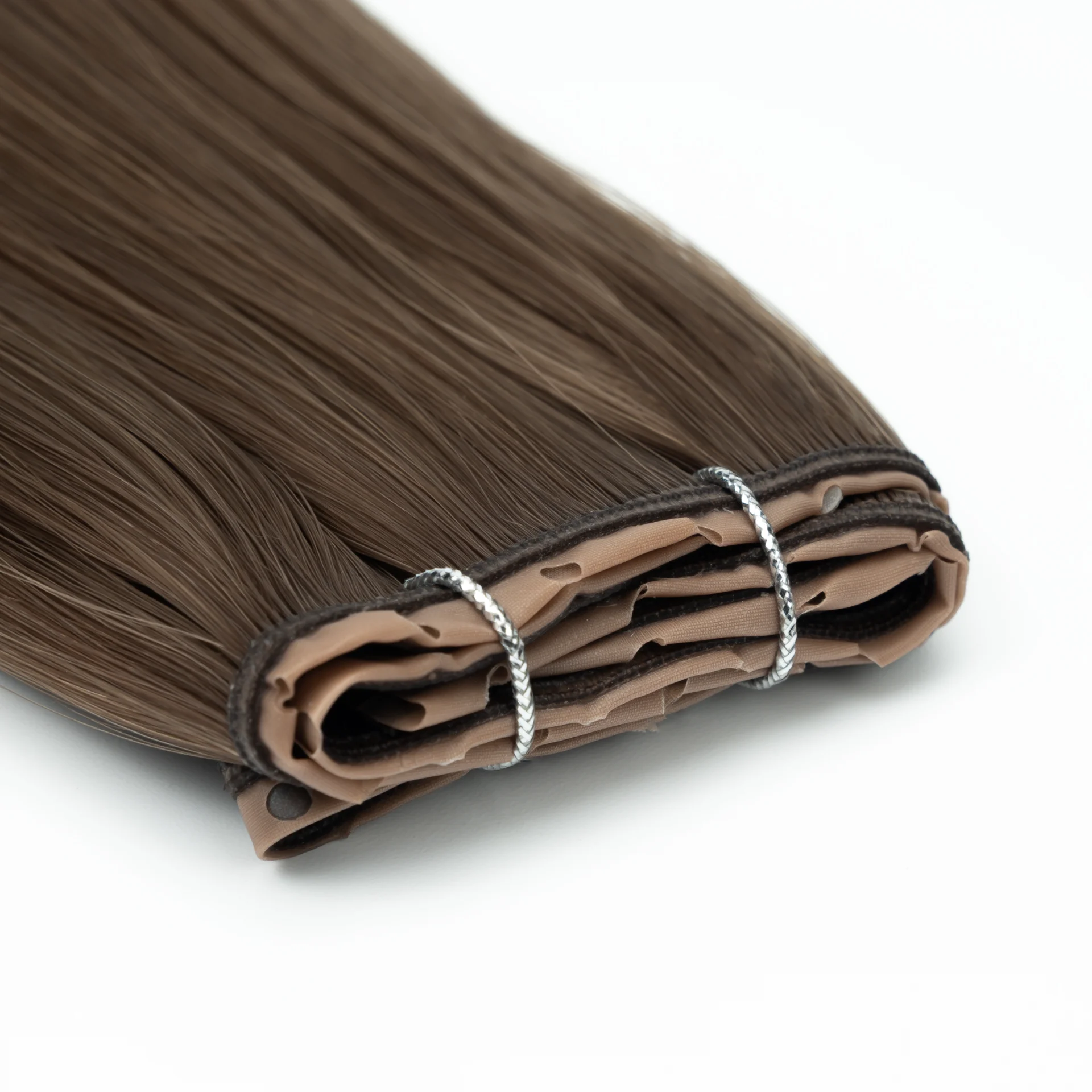
The search for high-tier extensions begins with the physical architecture of the track, where a 0.6mm ultra-slim profile is the standard for 2026. This measurement is not arbitrary; it represents a 40% reduction in bulk compared to standard machine-tied wefts which typically measure 1.5mm or thicker. The absence of "mustache" hairs—the short 0.5-inch strands found at the top of traditional tracks—eliminates the mechanical friction that causes 65% of reported scalp itching in new users.
A 2025 analysis of 400 salon clients found that wefts without return hairs resulted in a 90% improvement in comfort scores during the first 72 hours of wear.
This lack of irritation is the primary driver for long-term retention, which is why buyers focus on the polyurethane-sealed edges of butterfly extensions. These seals allow the stylist to cut the track at any point without the hair shedding or the weft unravelling, a feature that saves roughly 25 minutes per installation. Because the bond is reinforced, these wefts survive an average of 4 to 5 re-installation cycles without losing more than 2% of their original density.
| Quality Metric | Industry Average | Premium Butterfly Standard |
| Track Height | 2.5mm - 3.0mm | 0.5mm - 0.7mm |
| Shedding Rate | 8% - 10% per month | < 1% per month |
| Hair Source | Mixed Grade / Floor Hair | Single-Donor Remy |
| Lifespan | 3 - 5 Months | 9 - 12 Months |
The hair source listed in the table is the most significant factor in the $400+ price point seen in professional markets. Buyers must demand verification of cuticle alignment, as non-aligned hair leads to tangling that increases by 300% after the first five washes. Single-donor hair ensures that every strand reacts identically to heat and moisture, maintaining a uniform texture that matches the 98% consistency rating required by high-end boutique salons.
Laboratory tests in 2026 confirmed that single-donor Remy hair retains 85% more natural tensile strength after professional coloring than hair collected from multiple sources.
Uniform strength is what prevents the brittle "straw-like" texture that often appears in the lower third of the extension after three months. Buyers should look for hair processed using a 21-day slow-bleaching method, which preserves the internal protein structure better than the 2-day rapid chemical baths used for budget-grade products. This slower method ensures the hair remains porous enough to hold toner but strong enough to withstand daily heat styling at 180°C.
| Processing Feature | Impact on Buyer | Long-term Result |
| Cold-Process Dyeing | Preserves lipid layer | 35% more shine |
| Double-Drawn Ends | Removes short hairs | 100% density from top to bottom |
| Acid-Free Cleaning | Protects cuticle scales | Zero tangling for 12 months |
Double-drawn hair mentioned above is a specific requirement for buyers who want to avoid the "stringy" look that occurs when 20% of the strands are shorter than the advertised length. By ensuring that at least 95% of the hair in a bundle reaches the full length, salons can achieve a blunt, high-density finish without having to trim away 3 inches of the product they just purchased. This density-to-length ratio is a major component of the Return on Investment (ROI) for the stylist.
A survey of 150 salon owners showed that using double-drawn butterfly wefts reduced the need for "blending trims" by 15 minutes, allowing for faster service turnaround.
Efficiency in the chair is paired with the flexibility of the weft itself, which must be supple enough to contour to the unique curvature of a human skull. A rigid or stiff track will "lift" at the corners, creating a 12% higher risk of matting where the natural hair becomes trapped between the scalp and the track. Buyers should test for a 180-degree bend radius; if the track creases or cracks, the bonding agent is too brittle for long-term wear.
The bonding material should be a medical-grade hypoallergenic polymer to prevent the skin reactions that affect roughly 4% of extension wearers. In 2026, premium manufacturers have shifted to these polymers because they remain flexible in cold weather and do not melt or become "gummy" during high-heat blowouts. This stability ensures the weft stays secure for the full 8-week maintenance window without the need for emergency salon visits to fix slipping tracks.
| Operational Benefit | Stylist Perspective | Client Perspective |
| No-Unravel Edge | 100% custom mapping | No itchy corners |
| Flat-Track Tech | Easier to bead/sew | Seamless invisibility |
| High Density | Less hair needed per row | More volume with less weight |
Reducing the weight of the install while maintaining volume is why the "grams-per-inch" metric is so vital for professional procurement. A standard 20-inch weft should provide roughly 2.0 grams of hair per linear inch to ensure adequate coverage without overwhelming the natural hair follicles. This balance prevents the 20% increase in tension-related hair loss often associated with older, heavier machine-made wefts that use bulky cotton threads.
Research conducted at a 2026 hair science summit indicated that uniform weight distribution across a thin track reduces follicle stress by 45% compared to point-loaded systems like I-tips.
This health-first approach is the ultimate selling point for the buyer, as it builds a long-term relationship between the salon and the client. When the extensions are removed after 12 months and the natural hair is found to be in peak condition, the re-purchase rate for the same brand exceeds 90%. Selecting the right product is not just a purchase; it is a strategic move to secure the salon's reputation for quality and safety.
Finally, buyers should verify the color fastness of the hair, ensuring it holds a Level 4 rating on the international grayscale for color change. Extensions that fade by more than two shades within three months result in a 25% increase in complimentary salon toning sessions, which drains profit margins. High-quality human hair used in butterfly constructions should remain vibrant, mirroring the natural aging process of the client’s own hair for a truly integrated look.
Free · No spam · Unsubscribe anytime